
Ultimate Guide to Top Concrete Leveling Products and Accessories
Find out which products are favored by experts for achieving flawless concrete surfaces with minimal effort.
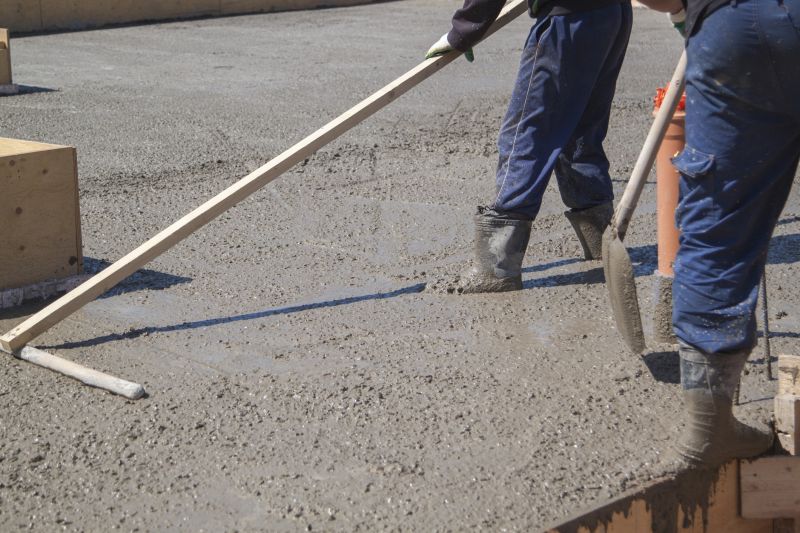 Concrete leveling is an essential process for maintaining the stability and appearance of flat surfaces such as driveways, patios, walkways, and floors. Over time, concrete surfaces can develop uneven spots, cracks, or settling issues due to ground movement, soil erosion, or temperature fluctuations. Addressing these issues promptly helps prevent further damage and maintains the safety and functionality of the area. Various products are available to facilitate effective concrete leveling, each suited to different types of repairs and user preferences.
Top Overall Option
Self-Leveling Concrete Compound
A versatile self-leveling concrete compound offers ease of application and smooth finishes, making it suitable for a variety of small to medium-sized leveling projects. It can be poured directly onto the surface, flowing into cracks and uneven areas to create a flat, stable surface. Proper surface preparation and adherence to application instructions are key to achieving optimal results.
Types of Products For Concrete Levelings
Self-Leveling Concrete
Fluid mixture designed to fill and level uneven surfaces with minimal effort, ideal for floors and large flat areas.
Concrete Patching Compound
Used for repairing small cracks and holes, providing a durable patch that blends with existing concrete.
Polyurethane Foam Injectors
Expanding foam used to lift sunken slabs and stabilize uneven concrete surfaces.
Hydraulic Cement
Fast-setting cement ideal for stopping leaks and repairing cracks in concrete structures.
Epoxy Concrete Repair
High-strength epoxy formulations for bonding and repairing cracked or broken concrete sections.
Polymer-Modified Overlay
Thin overlays that can be applied over existing concrete to improve surface levelness and appearance.
Mudjacking Equipment
Equipment used for slurry injection to lift and level sunken slabs in larger projects.
Crack Repair Sealants
Flexible sealants designed to fill and seal cracks, preventing water infiltration and further damage.
Concrete Resurfacer
Thin layer of material applied over existing concrete to restore smoothness and uniformity.
Polyurea Coatings
Rapid-curing coatings used to reinforce and level concrete surfaces with high durability.
Popular Choices
Widely used for leveling interior floors, offering smooth finishes with straightforward application.
Commonly used for sealing small to medium cracks, helping to prevent water ingress.
Popular for raising sunken slabs and stabilizing uneven concrete surfaces.
Frequently chosen for quick repairs and patching in high-stress areas.
Commonly used for structural repairs and bonding broken concrete pieces.
Popular for resurfacing worn or damaged concrete surfaces with minimal downtime.
Often used in larger-scale leveling projects to lift and stabilize slabs efficiently.
Preferred for quick sealing of cracks in driveways and sidewalks.
A common choice for restoring the surface of deteriorated concrete floors and patios.
Popular for their fast curing and high durability in concrete repair and leveling.
When selecting products for concrete leveling, it is important to consider the specific nature of the problem, the size of the area, and the desired finish. Some solutions involve self-leveling compounds that can be poured or troweled into place, while others are designed for more targeted repairs such as crack injections or patching. Proper preparation and application are crucial for achieving durable results, and understanding the differences between product types can help users choose the right solution for their project.
In addition to the product type, factors such as ease of use, drying time, and compatibility with existing concrete are important considerations. Many products are formulated to work well in various environmental conditions, ensuring that repairs hold up over time. For larger or more complex leveling jobs, professional-grade products or equipment may be recommended, but there are also many user-friendly options suitable for DIY projects. Overall, selecting the appropriate concrete leveling products can significantly improve the longevity and safety of concrete surfaces in residential or commercial settings.
Key Buying Considerations
- Identify the specific issue with your concrete surface, such as cracks, unevenness, or sinking.
- Determine the size of the area needing repair to select appropriately scaled products.
- Consider whether a DIY-friendly product or professional-grade equipment is required.
- Check the drying and curing times to plan your repair schedule accordingly.
- Assess compatibility with existing concrete materials to ensure proper adhesion.
- Review the ease of application, including tools needed and user experience level.
- Evaluate the environmental conditions during application, such as temperature and humidity.
- Understand the long-term durability and resistance features of the product.
- Look for products that provide a seamless finish or blend well with existing surfaces.
- Consider the need for additional surface preparation, such as cleaning or priming.
- Check for any safety precautions or protective gear required during application.
- Verify the product’s capacity to handle the extent of damage or sinking.
- Review customer feedback and product reviews for insights on performance.
- Ensure the product is suitable for indoor or outdoor use, depending on location.
- Compare costs relative to the project scope and expected longevity.